Permafrost Slump Stress Distribution Model
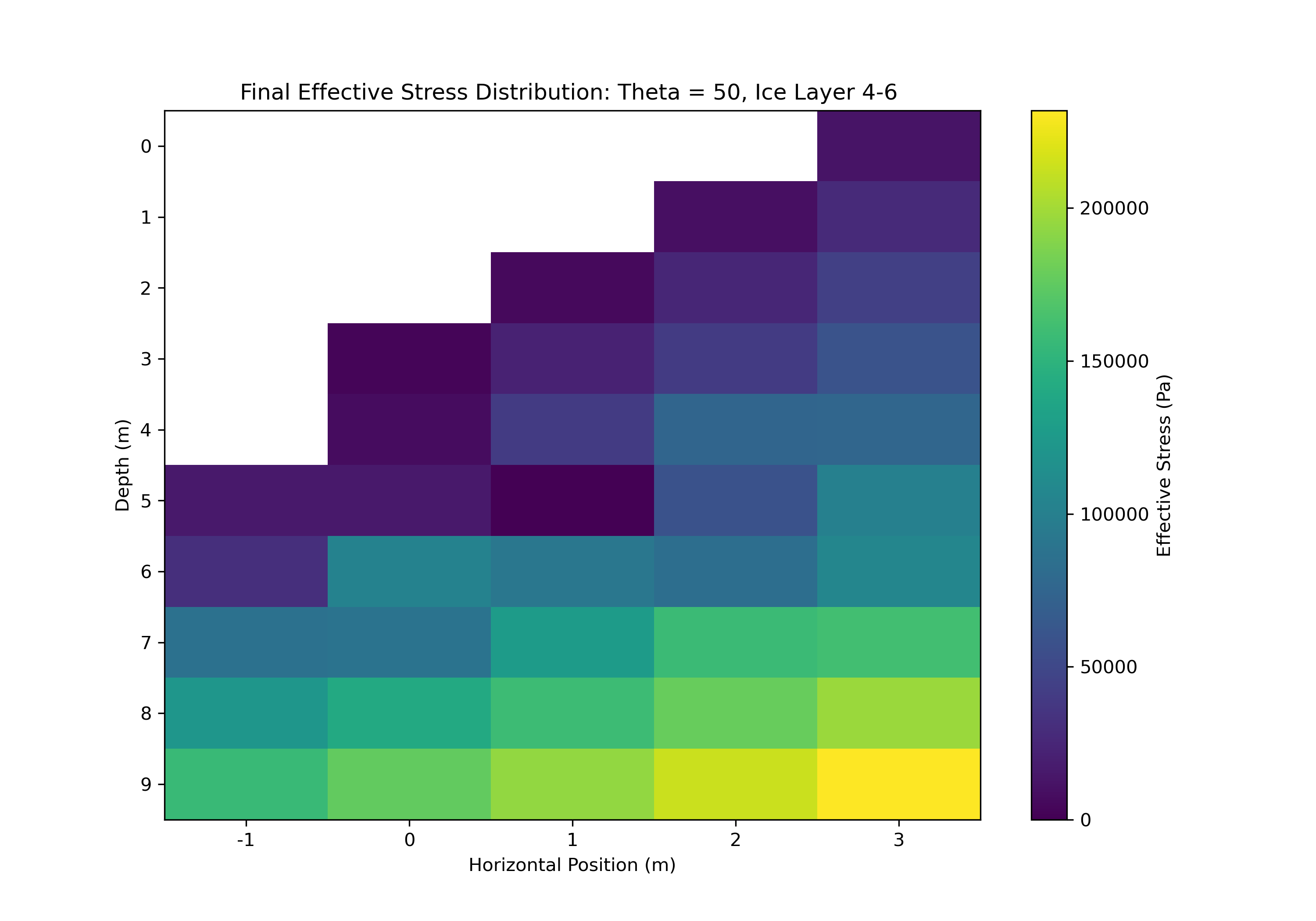
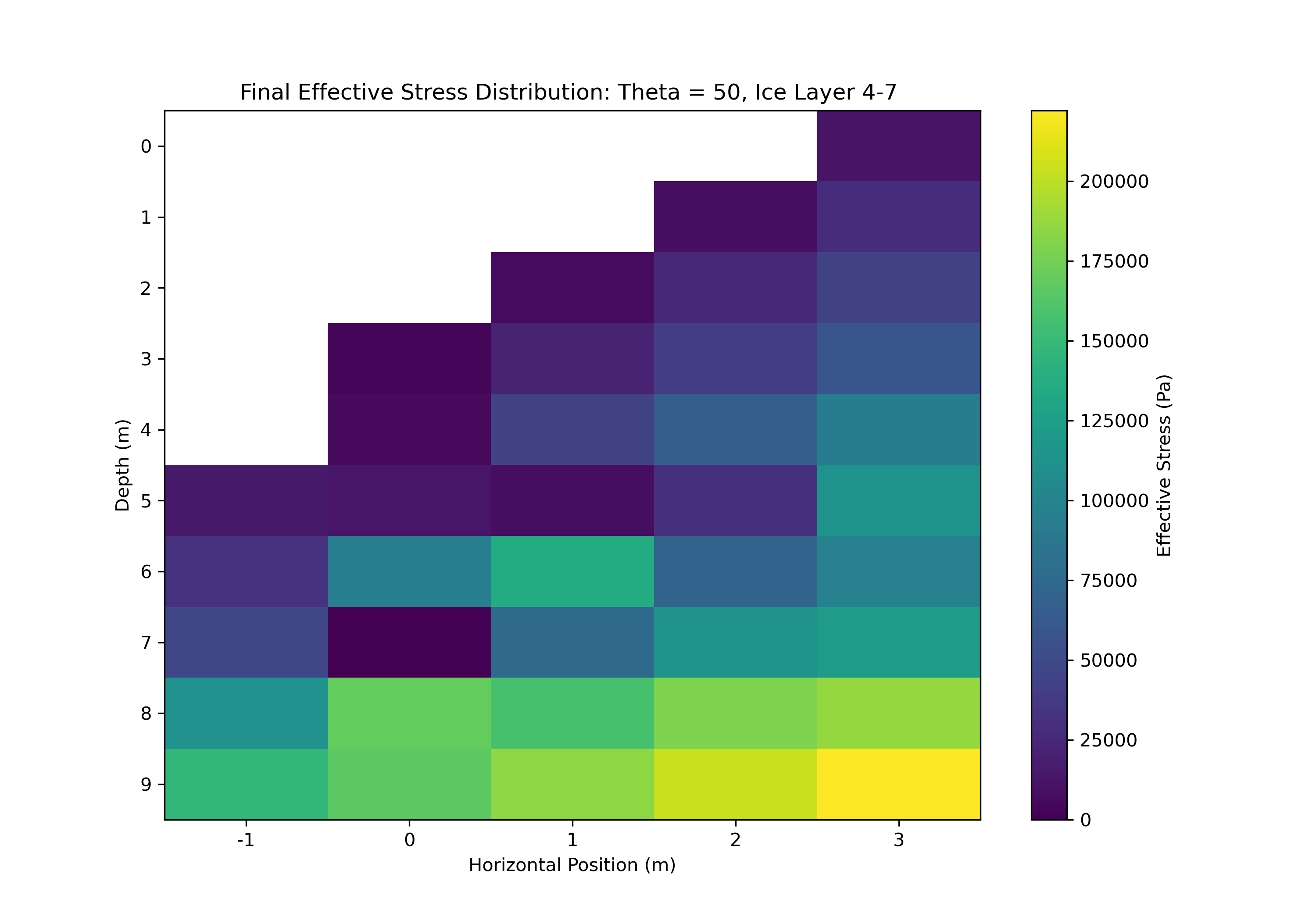
With the aim of encoding environmental mechanics into a conceptual model and investigating a scientific research question from scratch, I built a 1D and 2D finite-difference model to simulate the pore-water stress distribution from a melting ice lens in soil and predict permafrost slumps.
WHAT IS PERMAFROST?
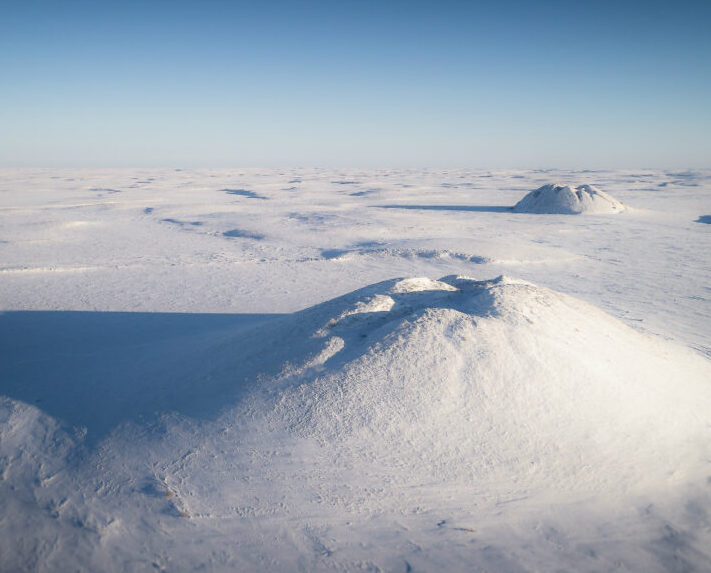
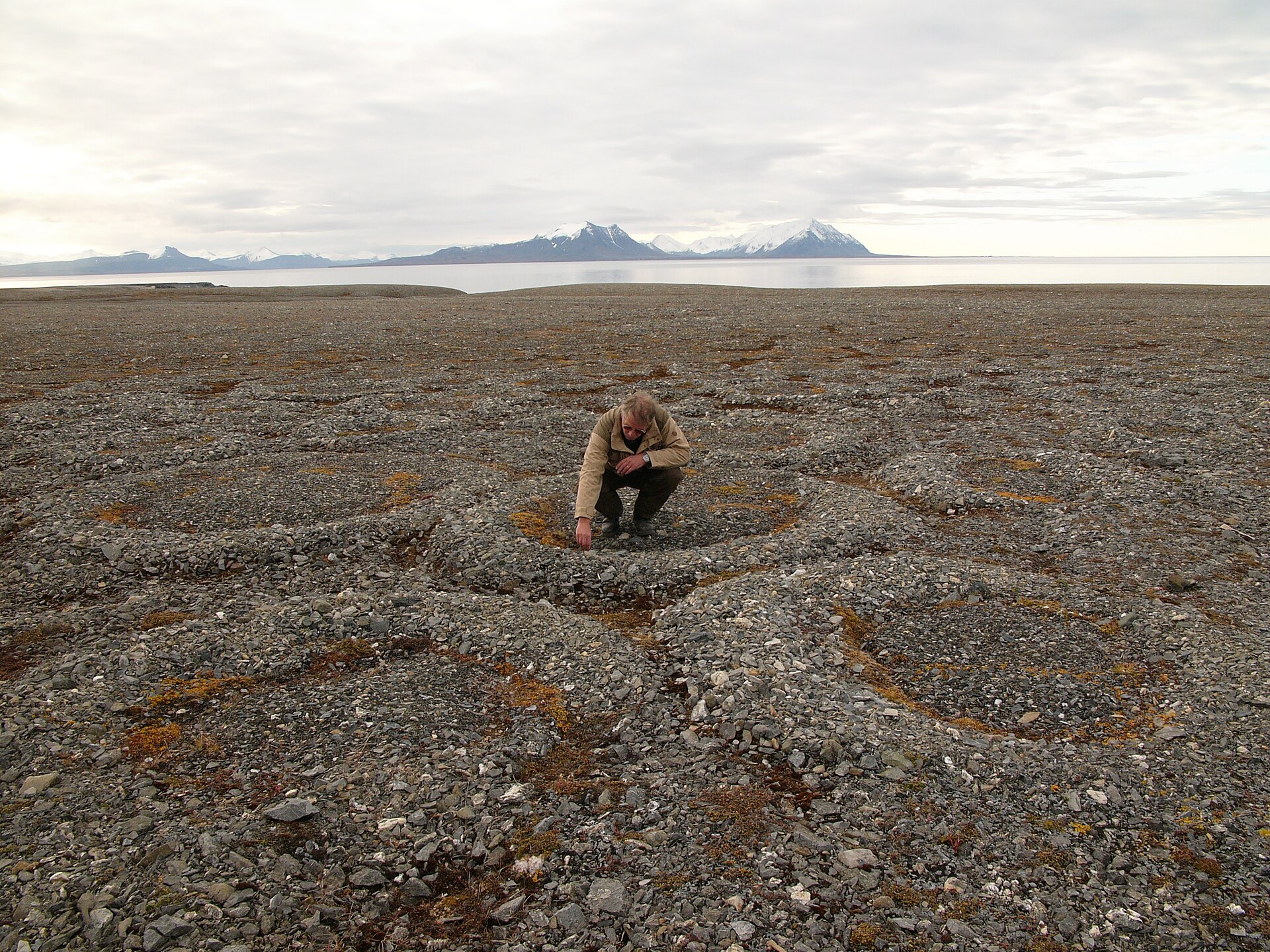
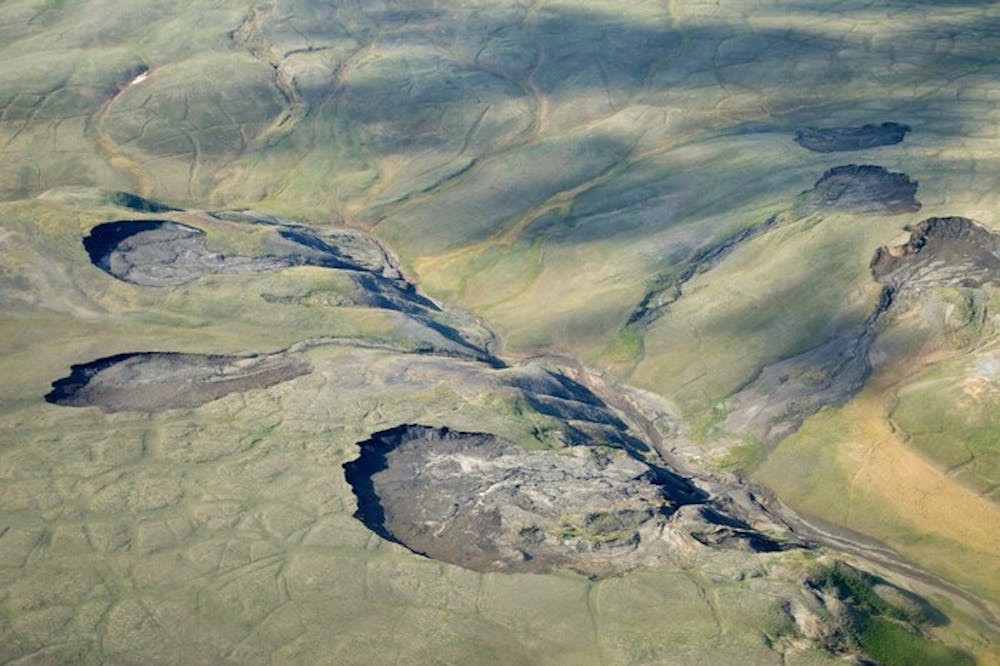
Permafrost is defined as soil that has been continuously frozen for at least two years, and it covers around 15% of the Northern Hemisphere with depths ranging from around a single meter to 1,500. As the Arctic experiences more significant temperature fluctuations compared to the rest of the world, permafrost is melting at an incredibly fast rate. The geomorphology of permafrost landscapes can be incredibly complex due to the geomorphological processes connected to freeze-thaw cycles, resulting in fascinating landforms including pingos, large mounds caused by ice lenses forming underneath the active layer of soil, ice wedges creating cracks in soil and rock as they expand, and stone rings formed by rock sorting. Another kind of landform event in these landscapes are permafrost slumps, large mass-wasting events that are triggered when an ice-rich section of the soil column thaws and reduces stability. These usually occur as landslides on permafrost-rich slopes, but can even occur on relatively flat surfaces!
MODEL DETAILS & IMPLEMENTATION
In this project, I aim to investigate the role of an ice lens on permafrost slumps. More specifically, I focus on how the spike in pore water pressure, due to a large body of ice melting, compares to the overburden pressure - with the assumption that when these two are equal, the soil is fluidized and is prone to slump given any applied stress. My hypothesis is that the larger the ice lens is in comparison to the soil column, the deeper the system will become fluidized, and thus the more significant of a slump given that more soil mass would be destabilized.
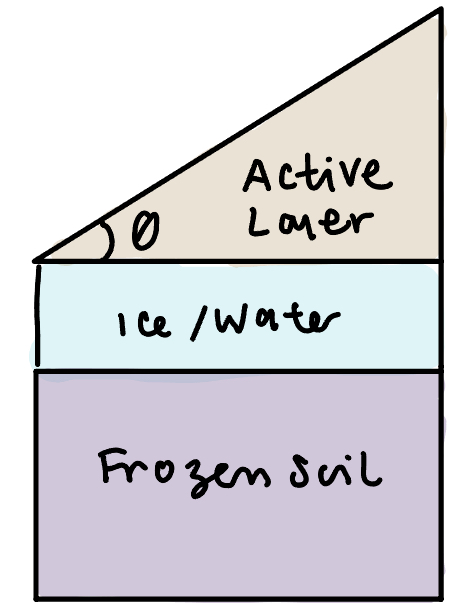
The model was developed in Python and implemented with varying slope angles and ice-to-soil ratios. On flat terrain, even large ice volumes couldn't produce a slump, but on sloped geometries the results were much more notable – an ice lens occupying as little as a third of the column depth was enough to trigger fluidization at 30°, and the depth of failure increased with ice volume, confirming the initial hypothesis. Check out my course report for more details on permafrost mechanics!